Textile Waste Awareness Weeks: What They Mean for the Reuse Trade
Note on this post's framing: there is no single, universally recognized event called "Textile Waste Week." What exists is a growing calendar of separate, verifiable awareness campaigns, Recycle Week in the UK, Secondhand September, and the UN's International Day of Zero Waste among them, that each put textile waste and textile reuse in front of a general audience for a few days or weeks a year. This post treats them as a group, because together they say something real about where the reuse trade is heading.
A growing calendar of textile-waste attention
A few dates are worth knowing if you work anywhere in the reuse chain. WRAP, the UK's Waste and Resources Action Programme, has confirmed Recycle Week 2026 will run from 14 to 20 September, a national campaign covering household recycling broadly, with textiles as one strand. Running in parallel every September is Secondhand September, the campaign Oxfam GB launched in 2019 asking shoppers to pledge 30 days of buying only pre-owned clothing; it now draws tens of thousands of participants and has grown into one of the more visible consumer-facing reuse campaigns anywhere. Earlier in the year, UNEP and UN-Habitat mark the International Day of Zero Waste on 30 March, and fashion and textiles were the focus of that day's global programming in 2025.
None of these is a regulatory event. They do not change duty codes or import rules. What they do is put a spotlight, briefly but repeatedly, on a genuine problem: UNEP puts global textile waste generation at roughly 92 million tonnes a year, a figure that has roughly doubled since 2000 as garment use time has fallen sharply. UNEP's own projection has that figure rising toward 134 million tonnes a year by 2030 if nothing changes. The awareness weeks exist because that trend line is real, not because anyone needed a marketing hook.
Reuse and recycling are not the same thing
It is worth being precise here, because campaign coverage often blurs the two. WRAP's own textiles resource hierarchy places reuse above recycling: a garment that is worn again by someone new keeps far more of its original value, energy, and material investment than one that is broken down into fiber. Recycling has a role, particularly for garments too worn to wear again, but it is a lower rung, not a substitute.
Reuse is also the older and, in volume terms, the more established system. Long before textile-to-textile recycling technology existed at scale, charities, graders, and exporters were already collecting, sorting, and moving wearable clothing to the people who would wear it next. That system is what these awareness weeks are, often without saying so directly, pointing back to.
Where secondhand clothing exporters fit
This is the part of the story that rarely makes the campaign coverage, and it is the part Fastex operates in every day. Clothing donated during a Secondhand September pledge, or dropped at a textile bank during Recycle Week, mostly does not stay in the country where it was donated. A large share of it is sorted, graded, and exported, because established secondhand markets have both the demand and the infrastructure to put wearable clothing back into circulation efficiently.
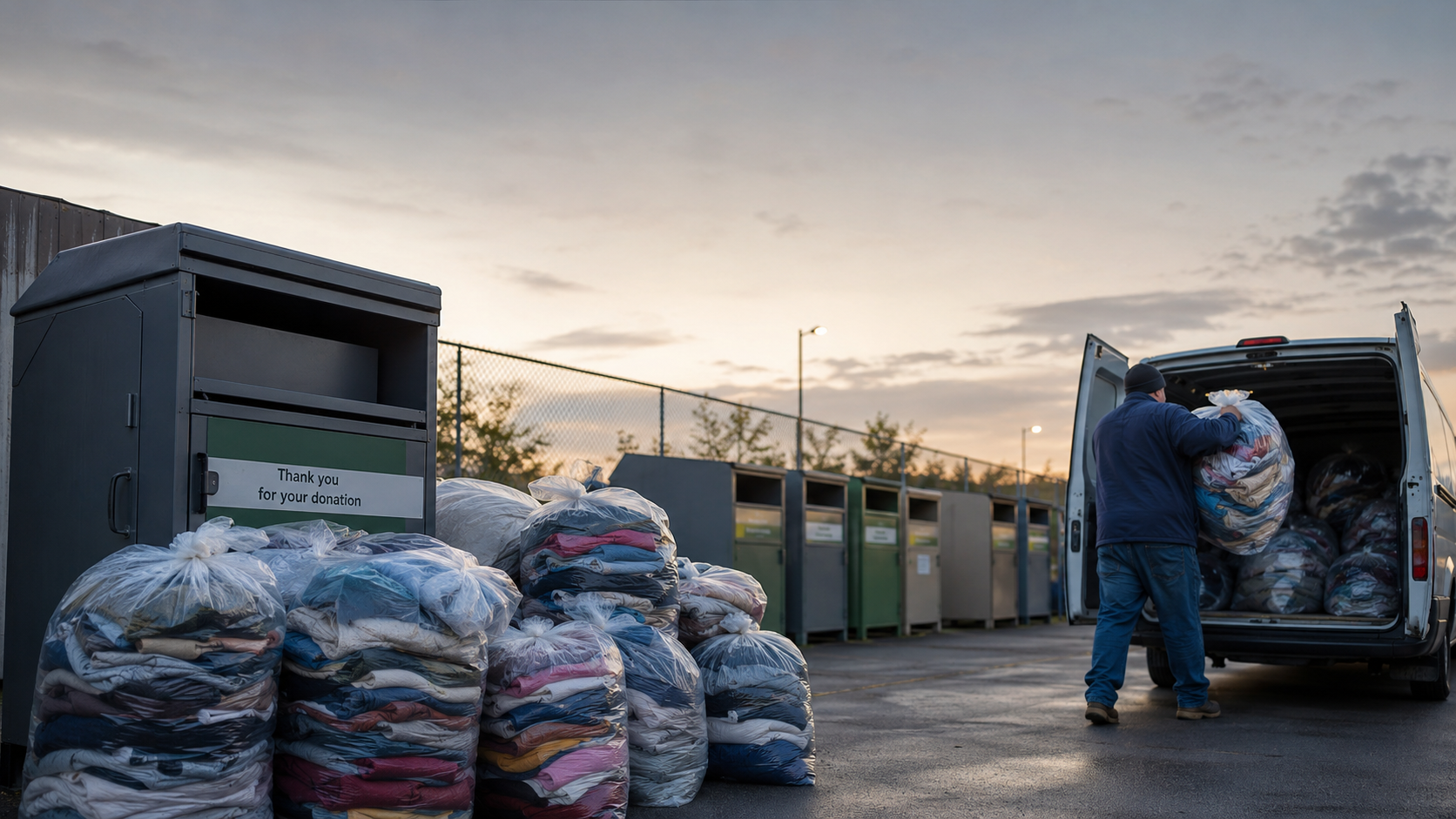
Fastex sources original donations and institutional collections from North America, Europe, the UK, and Australia, exactly the regions running most of these awareness campaigns, and exports the resulting credential clothing and mixed rags as full container loads to established markets including Pakistan, India, the UAE, and Central and South America, where Fastex has built an established presence over the past several years. As a SMART Association member exporting more than 700 containers a year, Fastex is one link in a chain that predates any single campaign and does not depend on one to function. What a good awareness week can do is bring more donated volume into that chain and a more informed public into the conversation about what happens next.
What these weeks change, and what they do not
It would overstate things to say a single campaign week reshapes container volumes or grading yields. It is fair to say the cumulative effect of years of Secondhand September, Recycle Week, and similar campaigns has been a steadier rise in public awareness of where clothing goes after donation, and a more informed set of questions from buyers and the public about traceability. For graders and importers, that shows up less as a demand shock and more as a slow, useful shift: more scrutiny of sourcing claims, more interest in documentation, and more willingness among consumers to donate rather than discard.
A few things are consistently true around these weeks, whichever specific campaign is in the news that month:
Donation volume ticks up locally. Awareness campaigns reliably increase drop-offs at charity shops and textile banks in the weeks they run, which feeds the collection side of the chain.
Media coverage repeats the same headline statistics. UNEP's 92-million-tonne figure and similar numbers recirculate every campaign cycle; verifying the current, sourced figure each time is worth doing rather than assuming last year's number still holds.
The reuse-versus-recycling confusion resurfaces. Coverage aimed at consumers often uses the words interchangeably; buyers and graders should keep the distinction sharp in their own materials.
Policy conversations get airtime. EU and UK textile waste and extended producer responsibility discussions tend to get renewed press attention during these weeks, worth tracking even when no rule has changed yet.
What this means for buyers and graders
None of this changes how a container should be bought or evaluated. It is a reminder of the demand-side story that sits behind the supply graders and importers already work with: charitable and institutional collection is not a shrinking or incidental source, it is a growing one, reinforced every year by campaigns that put secondhand clothing back in front of the public. For a buyer choosing a supplier, that makes questions about where stock is actually sourced, and how consistently, more relevant than ever. Verified-at-source collection is the answer to that question, not a slogan attached to it.
Frequently asked questions
Is "Textile Waste Week" a real, official event?
No single event by that exact name is a recognized global campaign. What exists is a cluster of separate, verifiable campaigns, including the UK's Recycle Week, Oxfam's Secondhand September, and the UN's International Day of Zero Waste, that each raise awareness of textile waste and reuse on their own schedules.
When is Recycle Week 2026?
WRAP has confirmed Recycle Week 2026 runs from 14 to 20 September in the UK, covering household recycling broadly, with textiles as one focus area.
What is Secondhand September?
Secondhand September is Oxfam GB's annual campaign, launched in 2019, asking participants to pledge to buy only pre-owned clothing for 30 days. It has grown into one of the most visible consumer-facing secondhand clothing campaigns, with tens of thousands of participants each year.
Does an awareness week actually affect the secondhand clothing export trade?
Not directly or immediately. The measurable effect is on the collection side, donation volumes tend to rise during and after these campaigns, which feeds the same charitable and institutional stream that graders and exporters buy from by the container.
What is the difference between textile reuse and textile recycling?
Reuse keeps a garment in service by having someone new wear it, while recycling breaks the material down into fiber or other inputs. Reuse preserves more of the garment's original value and is ranked above recycling in WRAP's textiles resource hierarchy.
Start a container enquiry
If your business sources by the container and you want a supplier whose stock is charity-verified and fully documented, tell us your target grades and destination port. Message Fastex on WhatsApp at +971 55 839 3916 or email info@fastexgt.com, or reach us through our contact page. Global trading, grounded in trust.